Agentic AI Technology
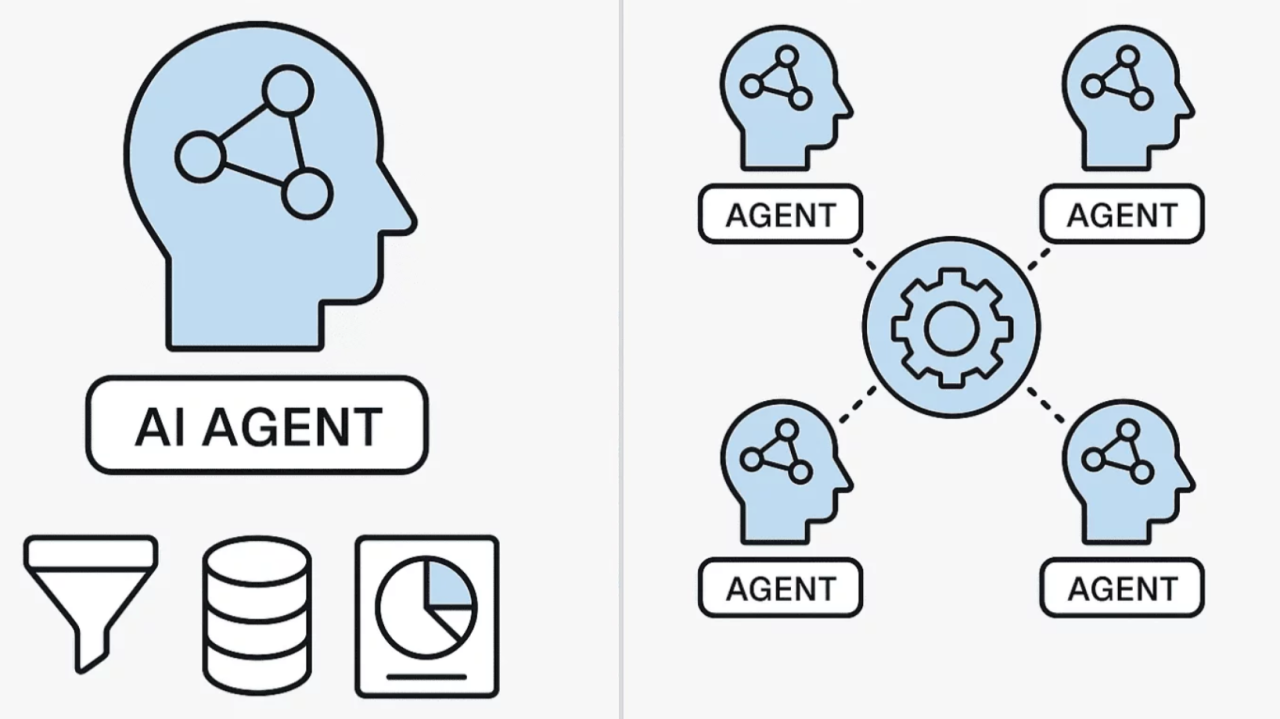
The business technology landscape has undergone a remarkable transformation over the past decade. We've journeyed from the rigid, rule-based world of Robotic Process Automation (RPA) to the creative capabilities of generative AI, and now we stand at the threshold of something far more profound: agentic AI.
From Automation to Autonomy
RPA revolutionized repetitive tasks by following predetermined scripts. Generative AI then amazed us with its ability to create content, analyze data, and engage in human-like conversations. But agentic AI represents a quantum leap forward. Unlike its predecessors, agentic AI operates with a high degree of autonomy. These systems don't just execute commands or generate responses—they perceive their environment, plan strategic approaches, take decisive actions, and continuously learn from outcomes. They're not just tools; they're digital colleagues capable of independent problem-solving.
The Enterprise-Grade AI Agent: Beyond the Hype
As agentic AI moves from experimental labs into production environments, enterprises must ensure these autonomous systems meet rigorous standards. A truly enterprise-ready AI agent requires three foundational capabilities:
Performance Monitoring
Continuous tracking of agent decisions, outcomes, and efficiency metrics ensures that AI agents deliver consistent value and flag anomalies before they become problems.
Governance Framework
Clear boundaries, decision-making protocols, and escalation pathways are essential. Agents must operate within defined parameters that align with business objectives, regulatory requirements, and ethical standards.
Audit Trail
Complete transparency through comprehensive logging of agent actions, reasoning processes, and data usage is non-negotiable for compliance, accountability, and continuous improvement.
2025 to 2026: From Specialists to Collaborative Ecosystems
This year, we've witnessed the emergence of specialized AI agents focused on specific domains—sales agents that qualify leads and manage pipelines, finance agents that reconcile accounts and forecast budgets, and risk management agents that identify threats and recommend mitigations. Each operates within its silo, delivering impressive results in narrow contexts.
But 2026 promises something far more transformative: the age of multi-agent collaboration. Imagine a sales agent seamlessly coordinating with a finance agent to create custom pricing proposals, while a risk agent simultaneously assesses exposure—all without human orchestration.
The Evolution of AI Agents
- Deeper agent-human integration where AI augments rather than replaces human judgment
- AI agents handle routine decisions while escalating complex scenarios to human experts
- Emergence of agent factories—platforms for building custom AI agents through no-code/low-code interfaces
- Democratizing agent creation to unlock innovation across every corner of the enterprise
The New Normal
As we look toward 2026, it's worth considering a reality that once seemed distant: some of your co-workers may very well be AI agents. They'll attend meetings (virtually), contribute to projects, make recommendations, and drive outcomes. A supervisor AI agent can manage specialized agents and even human workers to perform complex tasks.
The organizations that thrive will be those that embrace this evolution thoughtfully—building robust governance, investing in the right platforms, and fostering a culture where humans and agents collaborate to achieve what neither could accomplish alone.
The agentic AI era isn't coming. It's here.
The question is: how will you shape it?
What are your thoughts on working alongside AI agents? How is your organization preparing for this shift? We'd love to hear your perspectives and discuss how Active Intelligence can help you navigate this transformation.